
David and His' Recycling
- David Gardiepy
- Nov 9, 2022
- 6 min read

When I wrote the miniseries: Source-Separated vs Curbside Recycling I did not anticipate the response from many of you. The series sparked conversations about what really happens to recycling in the United States, as well caused many to question whether or not recycling is worth it—it is, I guarantee it. In addition to these conversations, many have asked what they really should be throwing in their commingle recycling bin if 20% isn’t ever recycled. With this in mind, and the limitations within Lane County, I wanted to help everyone out and provide a clearer picture of what I do personally with my waste. Many may be surprised to find out that I too still use curbside recycling services, in Cottage Grove.
There are still a few variations of what is currently accepted in commingle bins; however as I never throw plastics in my commingle bin, these differences within Lane County will have no impact here. As noted, I never throw my plastics in a commingle bin, this is a truth no matter where I am. I prefer to source-separate recycle all my plastics to ensure that they have the highest possible chance of making it to a new manufacturer for packaging/products. Plastics in curbside recycling have the lowest recovery rate and the highest landfill diversion rate due to contamination. Contamination can occur from a variety of avenues—generally consumer related ranging from dirty materials to the wrong materials tossed in the bin to begin with. Poor infrastructure in the United States is also a leading cause of plastics being diverted to landfills. As you may now realize, I recycle all my plastics through EcoGeneration’s programs, including my #1PETE and #2HDPE Bottles/Jugs. Cottage Grove residents should also note, our local hauler does not accept plastics in your home commingle curbside bin. If you want to recycle these commingle, you will need to do so at the Lane County Transfer Station (LCTS). You should always check with your hauler to identify what plastics are accepted commingle.
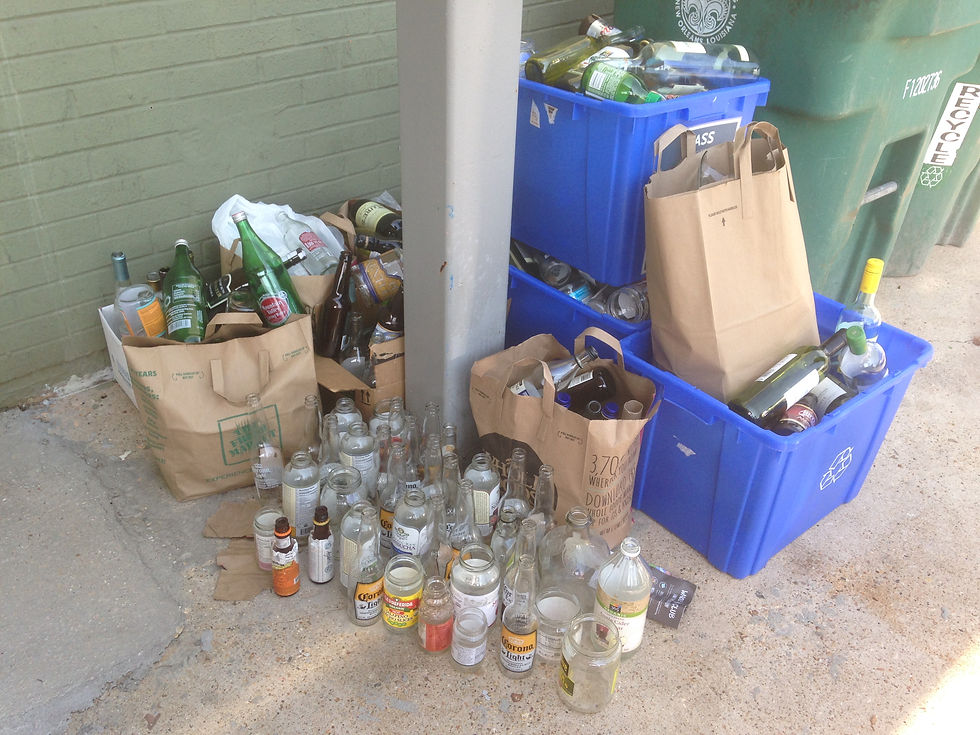
Now that plastics are out of the way, lets discuss glass for a moment. Glass should NEVER be put in a commingle bin, and instead either recycled in a glass bin or set next to the curbside bin. Glass is another major source of contamination in commingle recycling, not to mention a safety hazard. With regards to what is acceptable to recycle with glass, it cannot be high heat or tempered glass. Specific items that cannot be recycled curbside or at the LCTS include candle jars, candle lids, aquariums, Pyrex, drinking cups, tableware, windows, or other formed glass household objects. Only glass bottles/jugs/jars are recyclable curbside or at the LCTS. Glass is something I would recycle with my local hauler, if I didn’t go to the transfer stations as often as I do. I prefer to take it there, as it has the lowest possible carbon footprint, personally. This may not be the case for everyone, and is something I encourage everyone to consider when making decisions on what to do with your recycling.
In terms of metal, there are two different material categories that need to be considered: packaging and scrap metal. Any piece of metal smaller than a tennis ball should be considered scrap metal if you do not have access to source-separated tin/aluminum recycling. Items smaller than a tennis ball can create contamination in commingle recycling, as material recovery machines are unable to sort the smaller items out from other material streams. This would mean, unless you leave the lid attached to the can, please do not put it in your commingle bin. Staples, nails, and other small pieces of metal should be collected with your scrap metal. Scrap metal can be recycled at the LCTS or you can usually find someone online who is willing to haul larger amounts of scrap metal off for free. Now the famous question, does David put any type of metal in his curbside bin? Yes, I put food cans (tin/steel) in my curbside bin. My beverage cans are always donated to EcoGeneration to be recycled source-separated with Bottle Drop.
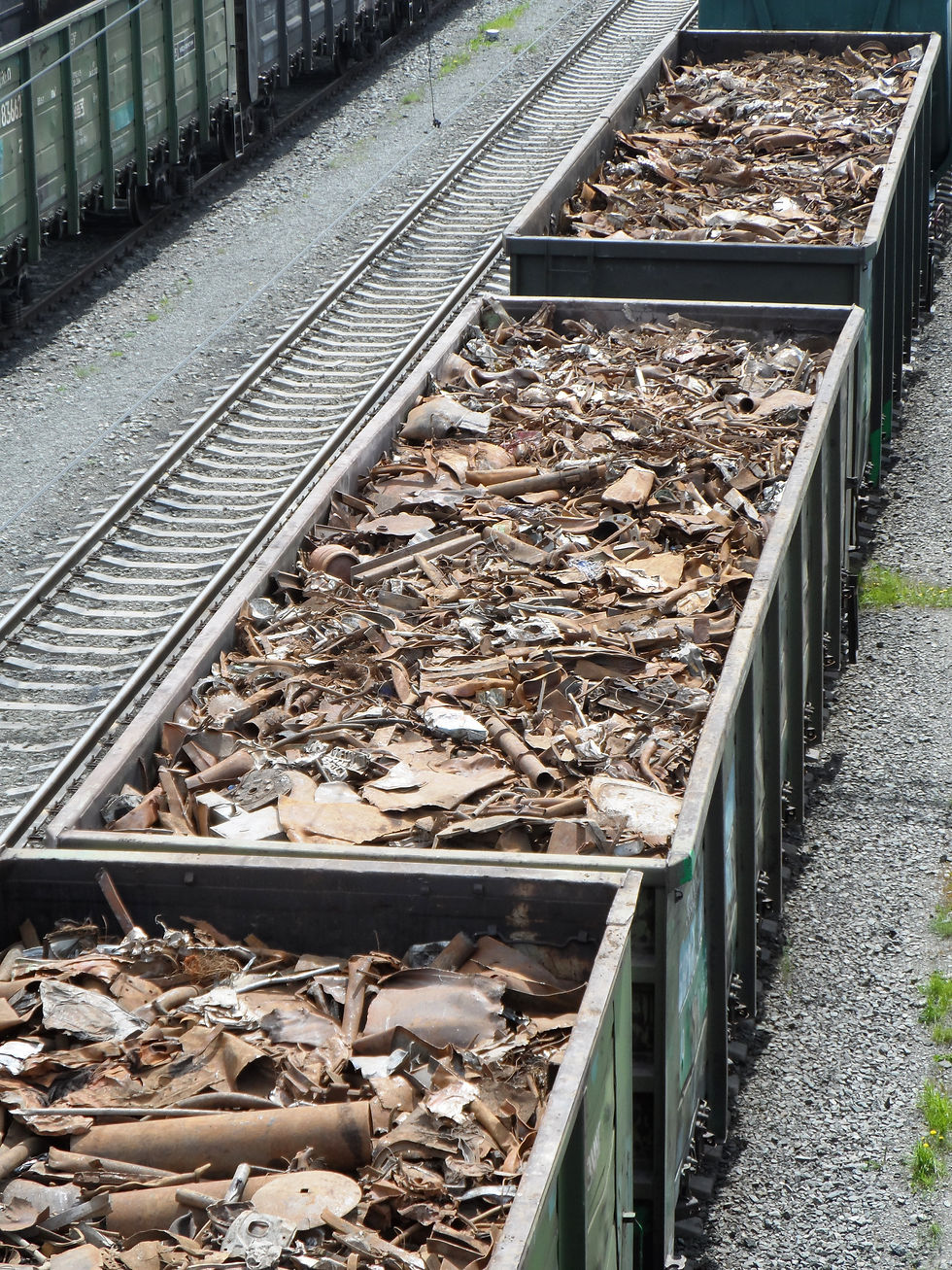
Aluminum is where I diverge, as I do not ball foil up and recycle it curbside—instead it goes with my scrap metal which is all taken to the LCTS and tossed into the bin with all the other scrap metal. This is also the fate of any aluminum food cat as well. I do this since our curbside recycling is bailed into massive one ton bails. With this in mind, and my understanding of how recycling is separated, I generally believe that aluminum ends up as contamination somewhere along the journey. This is especially notable when you consider that there is a heavy reliance on magnets to sort out metals from curbside recycling, and aluminum is not magnetic and therefore cannot be captured in this manner. As noted, all scrap metal should stay out of your commingle bin. Scrap metals would consist of all items that are not packaging: Think metal piping, metal siding, broken metal objects.
When I am at home, I put my cardboard and brown paper waste in my commingle bin. Generally, the cardboard would be boxes that I cannot reuse for one thing or another. Brown paper tends to be torn brown paper bags that are again not reusable. I put most of my paper waste in the commingle recycling bin as well. I do not see an issue with cardboard and paper being bailed together and compressed, it doesn’t really change or impact how it is sorted down the line. With regards to paper, I compost any item that is smaller than half a sheet of paper. I do this, as it is generally too small to be recycled and the carbon is always appreciated by my garden.


Paper and paperboard items that should NEVER be recycled commingle include freezer boxes/cartons, fridge boxes/cartons, aseptic cartons (TetraPak), wax cartons, paper with metallics, paper with glitter, and similar types of paper. All of these can lead to contamination for one reason or another. Boxes and cartons that are intended to be exposed to your refrigerator or freezer have plastic embedded in them to ensure that they do not degrade with exposure to the moisture present. Furthermore, most cartons have the appearance and feel of wax...but its deceiving you and is actually plastic. These items cannot be recycled, as the plastic will contaminate any future paper pulp. Other items that should never be recycled include paper tableware/cups, tissues, napkins/paper towels, toilet paper tubes, or food contaminated items. Rather many of these items can be composted, less ‘paper’ tableware/cups.
Now that you know my recycling secrets, lets briefly discuss what I compost. I compost paper that is smaller than a half-sheet of printer paper. This includes all post it notes, envelopes (removing the plastic windows), toilet paper tubes, food waste, and other organic items. I prefer to send as little to the landfill as possible.
If composting is not possible for you, consider curbside composting for your food waste in Eugene/Springfield or your local area if it exists. The primary complaint I hear is of the smell that compost generates. A way to avoid this is to keep a small container in your freezer, freezing the waste and tossing it in the compost bin the day before it goes out. If composting is not an available option, consider ways to either reuse the waste. Take toilet paper rolls, these are often sought after for arts and crafts. Don’t believe me, check ebay and you may be surprised. While you are at it, check to see if there are other items you can cash in on -a common one is glass bottles with droppers.
While it may take some creativity and critical thinking, it is possible to significantly reduce what you are sending to the landfill. Prior to starting EcoGenration’s Facebook page I generated a large amount of waste. Most of this was either wishcycled, or sent to the landfill. In many cases it was my intention to do what I thought was best at the time, and have since adjusted my shopping habits and disposal habits to better align with a reduced waste philosophy. I understand that this is not always possible, and that is why I always encourage community members to do what they can. Even if it is to simply learn what is and is not accepted in your local community’s curbside bin. The small act of only putting accepted materials in the bin can amplify anyone’s waste disposal skill set.


Comments